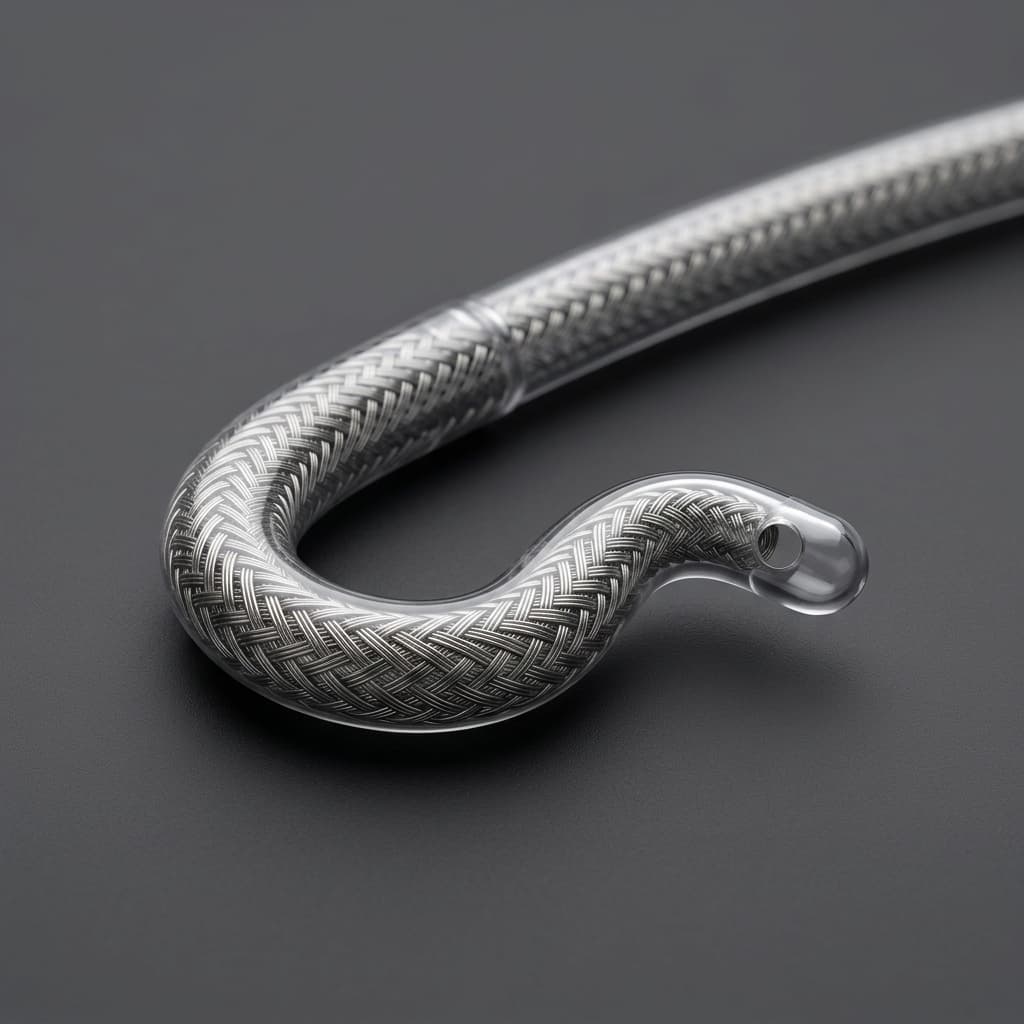
FDA Early Alert: Abiomed/Oscor Large-Bore Sheath Leakage and Hub Bonding Risks
The June 2026 FDA Early Alert regarding Abiomed and Oscor 14Fr/23Fr introducer sheaths reveals critical hub bonding and splittable score line vulnerabilities in large-bore catheter manufacturing.
[!CAUTION] Decision-Level Conclusion: Executive Summary for Sourcing & Engineering A June 10, 2026, FDA Early Alert (now classified as a Class I Recall) regarding Abiomed (and OEM Oscor) 14Fr and 23Fr introducer sheaths revealed severe vulnerabilities in hub bonding and splittable score line tolerances. With reports of major bleeding requiring interventions and three patient deaths (though causality is still under review), the clinical risk is severe. However, product removal is not currently required, and existing inventory can be used with high vigilance. Procurement teams and medical device engineers must immediately audit OEM partners manufacturing large-bore (14Fr+) introducers for robust adhesive curing, score line depth control, and hub-to-shaft transition integrity.
What Changed: The June 2026 FDA Early Alert
On June 10, 2026, the FDA issued an "Early Alert" directed at healthcare providers and supply chain managers regarding potential leakage issues with specific large-bore catheter introducer kits manufactured by Oscor for Abiomed (used with Impella pumps).
Timeline of the Early Alert
| Date | Event | Regulatory Context |
|---|---|---|
| Early 2026 | Clinical MAUDE reports surface | Reports of caps and hemostasis valves detaching from hubs, exposing adhesive |
| June 10, 2026 | FDA Early Alert Issued | FDA highlights potential for leakage from sidearms, under sheath caps, and at hub score lines |
| Late June 2026 | Class I Recall Classification | FDA designates the issue as high-risk, citing 8 instances of major bleeding and 3 deaths |
| Ongoing (2026) | Clinical Guidance Update | No physical product removal required; hospitals advised to use repositioning sheaths if leaks occur |
This alert serves as a vital engineering signal for the contract manufacturing industry: Large-bore (14Fr-23Fr) dynamics place immense leverage and stress on multi-component hub assemblies, making traditional adhesive bonding highly susceptible to failure if not strictly controlled.
Hub Assembly Failure Modes in Large-Bore Sheaths
| Component | Failure Mode | Root Cause (Engineering) | Risk Mitigation in Sourcing |
|---|---|---|---|
| Sidearm Joint | Leakage at junction | Adhesive peel under leverage stress | Require 100% positive pressure leak testing |
| Hemostasis Valve / Cap | Complete detachment | Incomplete UV/thermal adhesive curing | Audit OEM for automated curing profiles |
| Hub Score Line | Premature splitting/leakage | Score tolerance too deep or stress concentration | Validate tooling wear and molded stress |
Why It Matters: Large-Bore Dynamics and Adhesive Stress
In small-bore catheters (e.g., 4Fr-6Fr), the leverage applied by the shaft against the hub during manipulation is relatively minimal. However, scaling up to 14Fr or 23Fr introduces massive mechanical advantages that stress the hub assembly.
When a physician torques or inserts a heavy device through a 23Fr splittable sheath, the force transferred to the hub's adhesive joints—particularly where the rigid sidearm meets the hub body, and where the hemostasis cap is bonded—is substantial. If the adhesive layer is poorly cured, unevenly applied, or bridging a gap that is out of tolerance, it will shear or peel. Some MAUDE reports indicated that after cleaning the detached caps, "evidence of adhesive" was present, suggesting a cohesive or adhesive failure at the interface.
Who Should Act Now: Buyer and Engineering Action Checklist
Procurement teams and QA engineers outsourcing large-bore introducer sheaths or complex catheter hubs must update their supplier auditing checklists to address these specific mechanical vulnerabilities.
Supplier Verification Checklist
- Adhesive Curing Validation: Require the OEM to demonstrate mapping of their UV or thermal curing process. Is the adhesive curing uniformly underneath opaque components like the sheath cap?
- Score Line Depth Control: For splittable (peel-away) hubs, verify the CpK of the score line depth. Too shallow, and the hub won't peel; too deep, and it leaks under pressurized flow.
- 100% Torsional and Tensile Testing: AQL sampling is insufficient for large-bore hub joints. Request automated pull/torque testing on the sidearm and cap interfaces.
- Alternative Manufacturing Review: For next-gen products, discuss replacing adhesive bonding with insert molding or ultrasonic welding to create a single-body monolithic hub.
Risks, Limits, and Boundaries
While this Early Alert highlights a clear manufacturing and design vulnerability, buyers must consider the following boundaries before making drastic sourcing changes:
- Inventory Utilization (No Mandatory Removal): A critical operational boundary is that the FDA and Abiomed do not require product removal. Facilities are instructed to continue using existing stock but with heightened clinical vigilance. If a leak occurs, clinicians can often manage it via a device exchange or by utilizing a repositioning sheath.
- No Direct Causality Yet: The FDA explicitly states this is a "potential for leakage." While adverse events—including 8 reports of major bleeding and 3 patient deaths—have triggered a Class I recall classification, Abiomed has stated these severe outcomes cannot be definitively tied solely to the sheath leakage at this time.
- Process vs. Design Liability: If an OEM bonds a hub exactly to the client's print, but the print specifies an inadequate adhesive for the gap size, the fault lies in the design, not just the contract manufacturing process.
- Cost Constraints: Moving from UV adhesive bonding to insert injection molding (to eliminate joints) requires significant capital investment in tooling, which may not be feasible for lower-volume product lines.
Hub Joining Technology Comparison
| Joining Method | Risk of Leakage at Joint | Capital Tooling Cost | Suitability for Large-Bore |
|---|---|---|---|
| UV Adhesive Bonding | High (if curing is blocked) | Low | Marginal (Requires strict process control) |
| Insert Molding | Very Low | Very High | Excellent (Monolithic structure) |
| Ultrasonic Welding | Low (depends on material) | Medium | Good (For rigid thermoplastic hubs) |
| Solvent Bonding | Medium | Low | Poor (Inconsistent for high-stress joints) |
Architectural Considerations for Hub Assembly
Engineering teams must understand that splittable hubs are inherently compromised structures. They are designed to intentionally fail (split) along a specific axis. Introducing a sidearm or a robust hemostasis valve onto a structure designed to break requires extreme precision.
FAQ: Auditing Large-Bore Hub Assemblies
Q: Does this FDA alert mean all Abiomed Impella pumps are recalled? A: No, this is an Early Alert specifically targeting the introducer sheaths (14Fr and 23Fr) manufactured by Oscor for use with the pumps, not the pump itself.
Q: Can we rely on standard visual inspection for adhesive bonds under a hemostasis cap? A: No. Visual inspection is often inadequate for opaque or semi-opaque assemblies. Automated pull testing and destructive sectioning during lot release are recommended for high-risk joints.
Q: How does score line depth affect leakage? A: A score line that is too deep leaves insufficient material to handle the radial pressure of inserting a large-bore device, causing micro-cracking and eventual blood leakage before the physician intentionally splits the sheath.
Sources
- FDA Early Alert: Early Alert: Catheter Introducer Issue from Abiomed and Oscor (June 10, 2026). Details the clinical reports of blood leakage from sidearms, under sheath caps, and at hub score lines on 14Fr and 23Fr introducer kits.
- FDA Medical Device Recalls: Abiomed Recalls Impella Introducer Sheaths Due to Risk of Leakage (Updated 2026). Confirms the Class I recall status, the 8 bleeding events, 3 reported deaths, and the guidance that product removal is not mandatory.
- MAUDE Database Reports (FDA): References to detachment of caps and hemostasis valves from the hub, noting evidence of adhesive present on the detached components (Reported early-to-mid 2026).
- ISO 11070: Sterile single-use intravascular introducers, dilators and guidewires (Standard covering performance requirements for introducer sheath integrity).
Author

Categories
More Posts
FDA Class I Recall (July 2026): Mitigating Distal Tip Detachment in Delivery Catheters
The recent Class I recall of a major delivery catheter system over distal tip detachment highlights critical risks in inner shaft assembly and transition zone bonding. Learn how buyers and OEM engineers can audit suppliers to prevent this manufacturing defect.
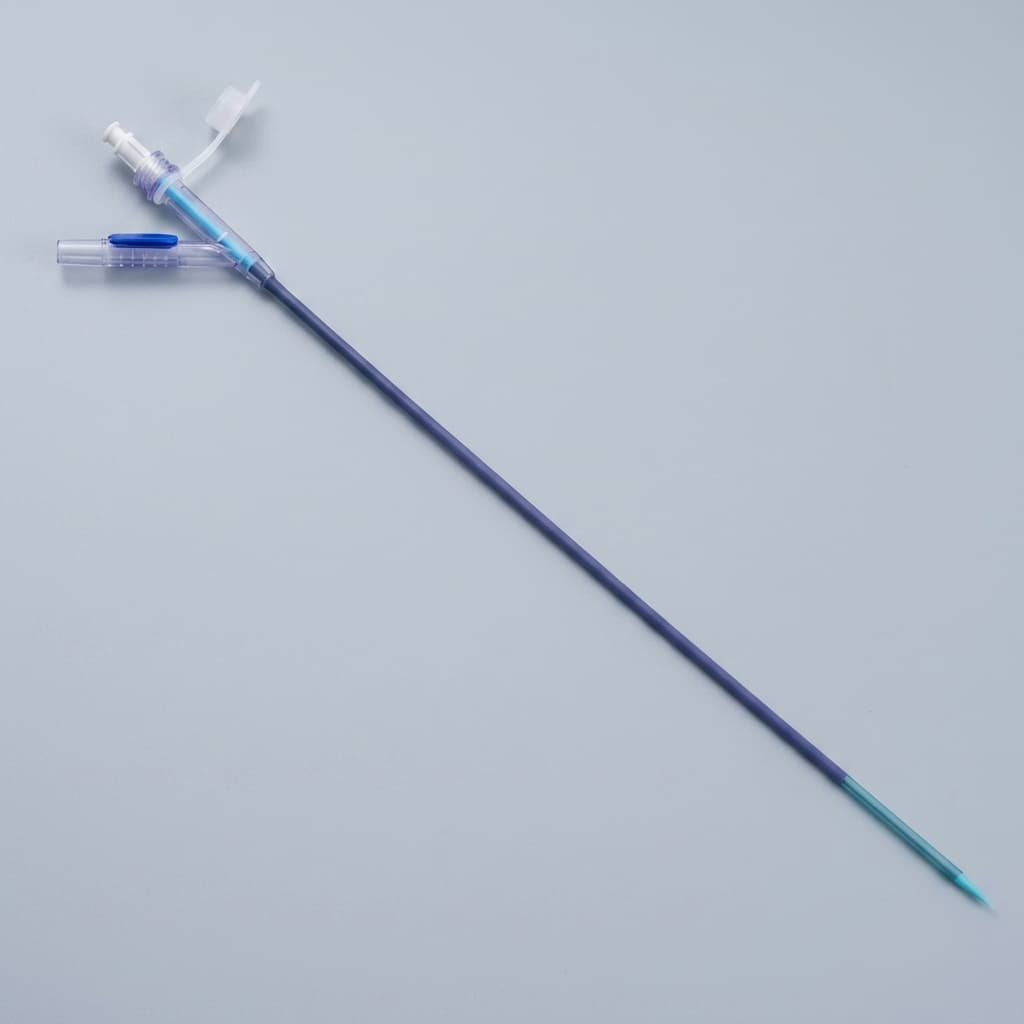
Buyer Guide: How to RFQ Braided & Coil Reinforced Catheter Shafts
A practical engineering and sourcing checklist for medical device teams evaluating catheter shaft OEM partners. Includes specific CTQ tolerance guides and material selection matrices.
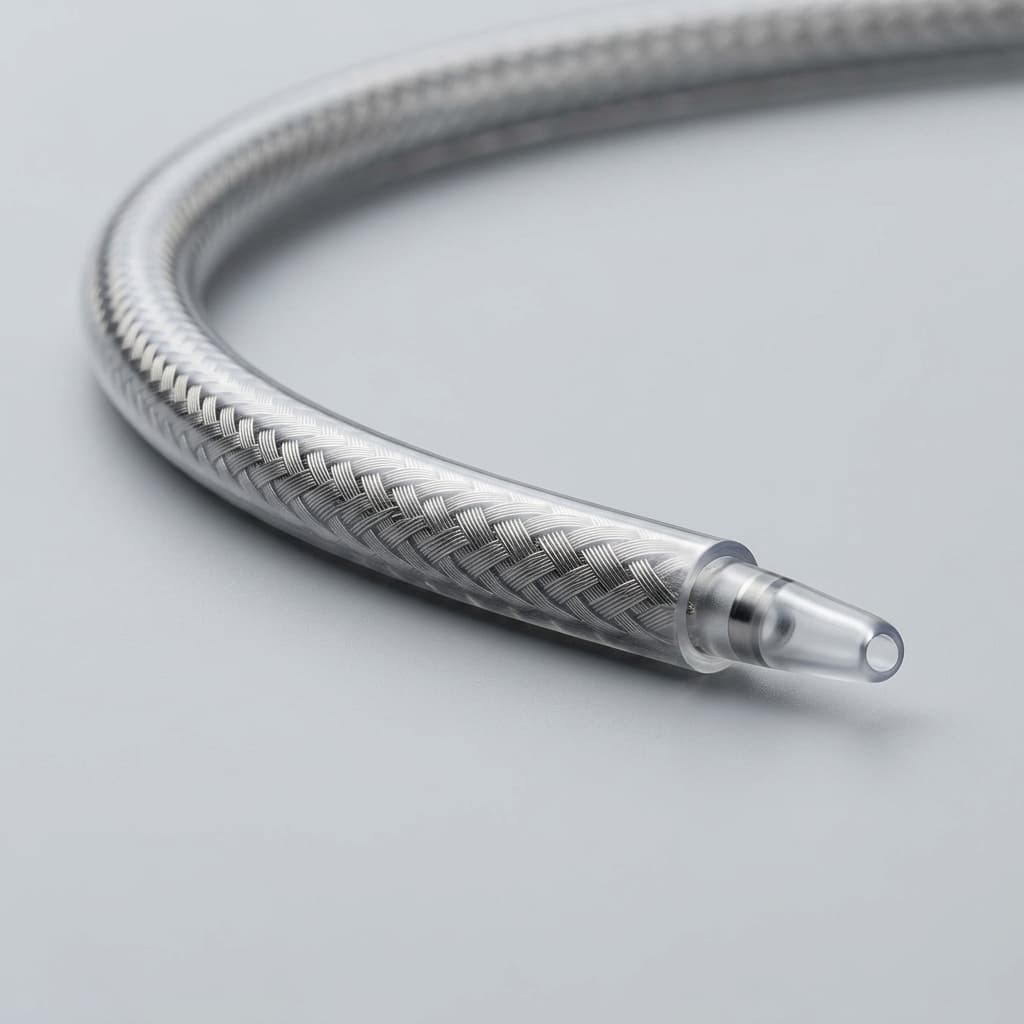
Variable Pitch vs. Multi-Segment Braiding: Optimizing Catheter Flexibility and Cost
Compare variable pitch braiding vs multi-segment catheter shafts for flexibility, kink risk, yield, cost, and OEM RFQ decisions. Request a DFM review.