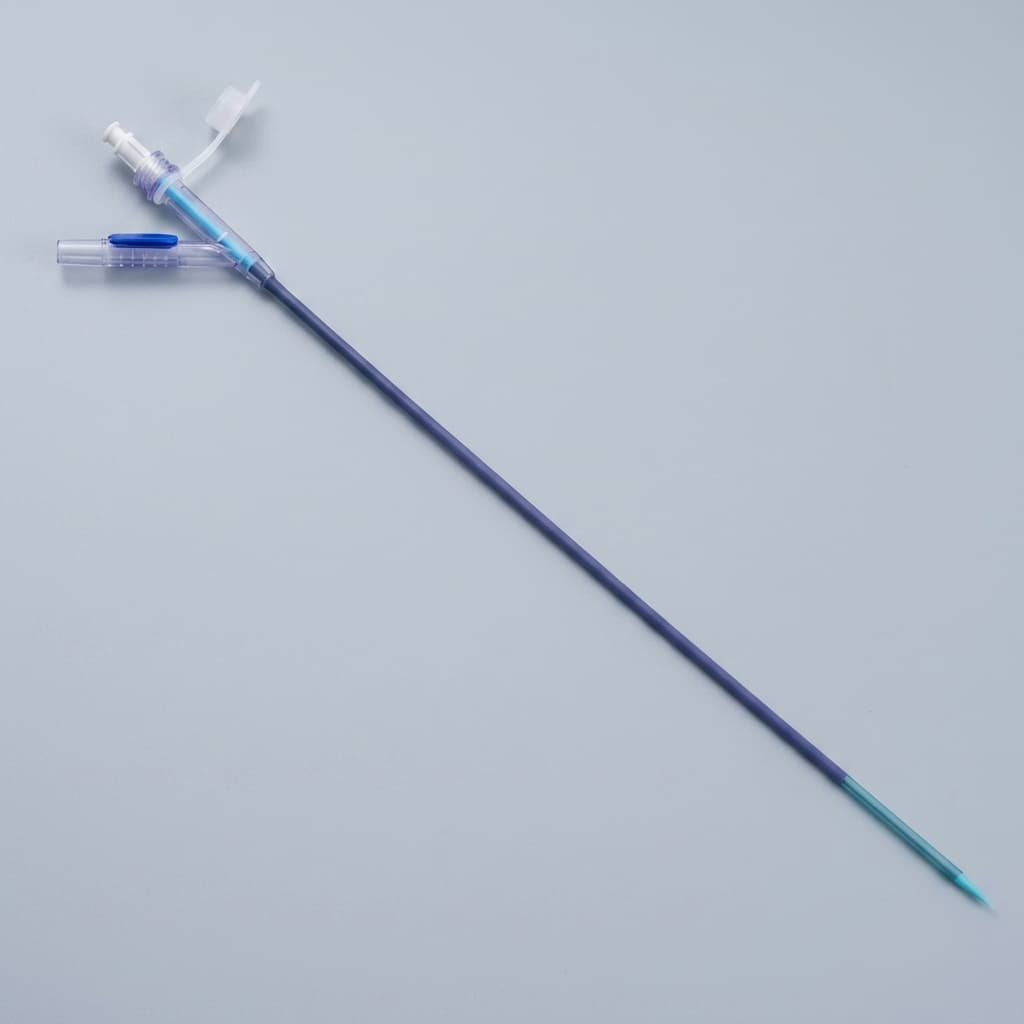
EtO Sterilization EPA Rules (2026): Impact on Catheter Polymer Selection and Sourcing
Use this 2026 EtO sterilization EPA rules guide to compare catheter polymer risks, radiation trade-offs, sourcing checks, and OEM review steps.
The medical device industry is undergoing a systemic shift that will fundamentally alter how complex devices like braided catheter shafts, PTFE-lined catheter shafts, and steerable catheter shafts are designed, manufactured, and sourced. In March 2024, the U.S. Environmental Protection Agency (EPA) finalized stringent amendments to the National Emission Standards for Hazardous Air Pollutants (NESHAP) regarding Ethylene Oxide (EtO) commercial sterilization facilities. With compliance planning, proposed reconsideration activity, facility upgrades, and abatement investments converging in 2026, the medical device supply chain is bracing for bottlenecks.
For decades, EtO has been the undisputed "gold standard" for sterilizing complex catheter shafts. Its ability to penetrate micro-lumens at low temperatures without degrading sensitive polymers has made it indispensable. However, as regulatory pressures force sterilizers to reduce emissions by over 90%, OEM capacity is shrinking, turnaround times are extending, and costs are rising.
The immediate reactionary instinct for many procurement and engineering teams is to mandate a shift to alternative terminal sterilization methods—primarily Gamma or Electron-Beam (E-beam) radiation. But for catheter manufacturing, this "simple switch" is an engineering minefield. The high-performance polymers that give modern catheters their steerability, flexibility, and lubricity are notoriously sensitive to high-energy radiation.
This guide provides a comprehensive breakdown of the 2026 EtO regulatory landscape, the polymer science dictating sterilization compatibility, alternative material strategies, and a definitive sourcing checklist for medical device buyers navigating this transition.
Scope and Assumptions (July 22, 2026)
This guide is written for global catheter OEM procurement, supplier quality, and engineering teams that rely on U.S. sterilization capacity, U.S.-market submissions, or suppliers affected by U.S. EtO facility constraints. It is a sourcing and material-selection screen, not legal advice and not a substitute for device-specific sterilization validation.
Use the recommendations below for early BOM review, RFQ preparation, and supplier-risk conversations. Final decisions still require validation with your sterilization partner, packaging supplier, regulatory lead, and test lab under the applicable EtO, radiation, biocompatibility, aging, and shelf-life standards. Also note that 2026 is not an automatic EtO ban; it is a capacity, compliance, and revalidation-risk window that may vary by sterilizer, geography, device class, and regulatory pathway.
For teams still defining the shaft architecture, pair this regulatory screen with a braid and coil reinforced catheter shaft CDMO review before freezing the liner, reinforcement, jacket, and sterilization path.
1. The Regulatory Landscape: EPA, FDA, and the 2026 Bottleneck
Ethylene Oxide (EtO) is currently used to sterilize approximately 50% of all medical devices in the United States—amounting to over 20 billion devices annually. For complex devices containing electronics, diverse polymers, or long, narrow lumens (like advanced delivery systems and reinforced catheters), EtO is often the only validated terminal sterilization method.
The EPA's 2024 NESHAP Amendments
The EPA's updated regulations aim to drastically reduce community exposure to EtO emissions. The final rule requires commercial sterilization facilities to implement advanced emission controls, capturing 99.99% of EtO emissions. While the rule was finalized in early 2024, the compliance timeline dictates that the most significant facility upgrades, operational disruptions, and potential facility closures will peak around 2026.
The Supply Chain Reality
As commercial sterilizers take lines offline to install abatement technology, overall market capacity will temporarily (or permanently) shrink. This leads to:
- Extended Lead Times: Sterilization turnaround times could stretch from days to weeks.
- Increased Costs: The capital expenditure for abatement systems will inevitably be passed down to device manufacturers.
- Consolidation of Cycles: Sterilizers are pushing for optimized, lower-concentration EtO cycles, which requires device manufacturers to re-validate their products.
The FDA has publicly expressed concerns about potential supply chain shortages stemming from these EPA regulations. In response, the FDA has launched pilot programs to accelerate the approval of sterilization site changes and the transition to alternative sterilization methods.
For catheter engineering teams, the mandate is clear: De-risk your product lines by either optimizing your EtO usage or engineering your device to survive alternative sterilization modalities.
2. The Polymer Science: Why Catheters Resist Radiation
If EtO capacity is constrained, why can't OEMs simply switch their braided catheters to Gamma or E-beam radiation? The answer lies in polymer chemistry.
Radiation sterilization utilizes high-energy ionizing radiation to destroy the DNA of microorganisms. However, this same ionizing energy breaks the covalent bonds within polymer chains—a process known as chain scission—or causes excessive cross-linking.
PTFE Liners: The Achilles' Heel of Radiation
Most high-performance neurovascular, cardiovascular, and structural heart catheters utilize an etched Polytetrafluoroethylene (PTFE) inner liner. PTFE is chosen for its exceptionally low coefficient of friction (COF), allowing guidewires and therapeutic devices to pass smoothly through tortuous anatomy.
The Problem: PTFE is highly susceptible to radiation degradation. When exposed to standard Gamma or E-beam sterilization doses (typically 25 to 40 kGy), the polymer undergoes severe chain scission. The molecular weight drops drastically, resulting in a brittle, fragile liner.
- Mechanical Failure: Irradiated PTFE liners can crack or flake off inside the patient's vasculature—a catastrophic failure mode.
- Loss of Elongation: Tensile strength and elongation at break can plummet by over 80% after a single standard Gamma cycle. For this reason, PTFE is universally considered incompatible with Gamma and E-beam sterilization.
Pebax and Nylon Jackets: Embrittlement and Discoloration
The outer jackets of braided catheters are typically constructed from thermoplastic elastomers like Pebax (polyether block amide) or Nylon 12. These materials are chosen for their excellent torque transmission, kink resistance, and ability to be extruded in variable durometers (stiffnesses) along the shaft.
The Problem: While more resistant than PTFE, Pebax and Nylon are still negatively affected by ionizing radiation.
- Cross-linking and Stiffening: Gamma radiation induces cross-linking in the amorphous regions of these polymers. This can cause a 35D (soft) Pebax distal tip to artificially stiffen, altering the clinical feel and trackability of the catheter.
- Oxidative Degradation: Radiation generates free radicals that react with oxygen over time. This leads to continued embrittlement long after the sterilization cycle is complete (aging degradation).
- Cosmetic Discoloration: Pebax and Nylon often exhibit significant yellowing after radiation exposure. While this may not always affect mechanical performance, it often triggers quality control rejections and raises alarms for clinicians accustomed to pristine, clear, or color-matched devices.
3. Visualizing the Decision Path
When migrating a legacy catheter or designing a new one in the post-2026 regulatory environment, teams must follow a strict decision matrix.
Catheter Sterilization & Material Decision Matrix
4. Engineering Alternatives: Redesigning for the Future
If you determine that relying on EtO poses an unacceptable supply chain risk, the catheter must be redesigned using radiation-compatible polymers. This requires careful consideration of mechanical trade-offs.
Liner Alternatives to PTFE
When replacing PTFE to achieve Gamma/E-beam compatibility, engineers must find materials that offer high lubricity without degrading under radiation:
- FEP (Fluorinated Ethylene Propylene): FEP offers a COF slightly higher than PTFE (0.20 vs 0.05) but is significantly more resistant to radiation up to 25 kGy. It can be extruded in very thin walls, making it a leading candidate for radiation-compatible inner liners.
- HDPE (High-Density Polyethylene): HDPE is highly resistant to radiation and offers a smooth surface. However, it lacks the extreme chemical inertness and ultra-low friction of fluoropolymers. It is often used in larger diameter delivery systems, coil reinforced catheter shafts, or sheaths rather than microcatheters.
- Polyimide (PI): Polyimide is incredibly strong, maintains ultra-thin walls (down to
0.0005"), and is highly radiation resistant. It is much stiffer than PTFE, making it ideal for the proximal sections of shafts, though it lacks innate lubricity (often requiring a secondary hydrophilic coating).
Jacket Alternatives to Pebax
Replacing Pebax requires finding a thermoplastic elastomer that mimics its excellent reflow characteristics during braiding encapsulation, but with better radiation stability.
- Thermoplastic Polyurethanes (TPU): Medical-grade TPUs (like Tecoflex or Pellethane) offer excellent flexibility, kink resistance, and superior radiation stability compared to Pebax. They do not discolor or embrittle to the same degree under Gamma.
- Radiation-Stabilized Nylons: Certain formulated Nylons include proprietary anti-oxidants and stabilizers that mitigate the free-radical damage caused by radiation, reducing yellowing and preserving mechanical integrity.
5. Structured Data: Polymer Sterilization Compatibility Matrix
Use this matrix to guide early-stage material selection when initiating a new catheter design or evaluating an existing Bill of Materials (BOM) against future sterilization constraints.
| Polymer Material | EtO (Ethylene Oxide) | Gamma Radiation | E-Beam Radiation | Autoclave (Steam) | VHP (Vaporized H2O2) | Primary Catheter Application |
|---|---|---|---|---|---|---|
| PTFE | Excellent | Destructive (Severe chain scission) | Destructive | Excellent | Good (Lumen penetration limits) | Inner lubricious liners |
| FEP | Excellent | Fair (Stable up to ~25 kGy) | Fair | Excellent | Good | Radiation-compatible liners |
| HDPE | Excellent | Good (Cross-linking may increase stiffness) | Good | Poor (Melting point too low) | Good | Structural liners, sheaths |
| Pebax® | Excellent | Fair (Discoloration, slight embrittlement) | Fair | Poor | Good | Outer variable-stiffness jackets |
| TPU (Polyurethane) | Excellent | Good (Highly stable, minimal yellowing) | Good | Poor to Fair | Excellent | Radiation-compatible jackets, atraumatic tips |
| Polyimide | Excellent | Excellent (Highly stable) | Excellent | Excellent | Good | Proximal pushability shafts |
| Nitinol (Braid/Coil) | Excellent | Excellent | Excellent | Excellent | Fair (Oxidation risk with H2O2) | Kink-resistant reinforcement |
| 304V Stainless Steel | Excellent | Excellent | Excellent | Excellent | Excellent | High-tensile reinforcement |
(Note: "Excellent" indicates no meaningful degradation of mechanical or cosmetic properties. "Fair" indicates measurable changes that require strict dose control and functional validation. "Destructive" indicates catastrophic failure).
6. Sourcing & Procurement Checklist for 2026
Procurement teams must proactively audit their contract manufacturing partners now. Waiting until 2026 to discover your OEM's sterilization partner has lost capacity will result in critical stockouts.
Use this checklist during your next OEM capability audit or RFQ phase:
- EtO Optimization Capabilities: Does the OEM have experience working with sterilizers to validate "optimized" (low-concentration, reduced-time) EtO cycles that require less abatement overhead?
- Alternative Sterilization Validation: Has the OEM successfully managed 510(k) or MDR transitions for legacy devices moving from EtO to Gamma/E-beam?
- Design for Manufacturability (DFM) with Alternative Polymers: Can the OEM successfully reflow FEP or TPU over braided shafts with the same yield rates as PTFE and Pebax? (FEP requires different processing temperatures and tooling).
- Secondary Coating Competence: If replacing PTFE with a less lubricious liner, can the OEM apply robust hydrophilic or hydrophobic coatings to recover the lost COF?
- Supply Chain Transparency: Has the OEM provided a written risk assessment regarding their current EtO sterilization partners and those partners' compliance status with the 2024 EPA NESHAP final rule?
- In-House Testing Validation: Does the OEM have in-house tensile testing, friction testing, and aging chambers to rapidly compare the mechanical performance of a radiated device versus an EtO predicate?
7. Frequently Asked Questions (FAQ)
Can we use Vaporized Hydrogen Peroxide (VHP) for catheter shafts instead of EtO or Radiation?
VHP is an emerging, FDA-recognized consensus standard for sterilization. It is an ambient temperature process that is highly gentle on polymers (excellent for PTFE and Pebax). However, VHP requires a vacuum to penetrate, and it struggles to successfully sterilize the deep, narrow internal diameters (long lumens) typical of catheters (e.g., a 150cm length with a 0.014" ID). Validation for long lumens is notoriously difficult.
Will changing from EtO to Gamma sterilization require a new FDA 510(k)?
In many cases, yes. The FDA views a change in sterilization modality—especially one that fundamentally interacts with the polymers (like radiation)—as a significant change requiring a new 510(k) submission. You must prove that the new sterilization method does not negatively impact the device's safety, efficacy, or shelf-life. The FDA's recent pilot programs aim to streamline this, but regulatory burden remains high.
If we must stick with EtO, how do we mitigate the 2026 supply chain risk?
The best strategy is cycle optimization. Work with your sterilizer to validate a "Parametric Release" cycle or a reduced-gas-concentration cycle. Devices that require less EtO per cycle are more attractive to commercial sterilizers who are trying to manage their total facility emission caps under the new EPA rules.
Does Gamma and E-beam affect the metal braided reinforcement?
No. Stainless Steel (304V) and Nitinol (NiTi) are entirely unaffected by the radiation doses used for medical device sterilization. The failure modes are entirely isolated to the polymer liners, jackets, and adhesives.
8. Sources and References
- Environmental Protection Agency (EPA): Final Amendments to Air Toxics Standards for Ethylene Oxide Commercial Sterilization Facilities (March 2024) and the 2026 reconsideration docket. Provides the regulatory timeline and compliance context. View EPA Final Rule and Rule History
- U.S. Food and Drug Administration (FDA): Sterilization of Medical Devices. Details FDA initiatives on EtO supply chain resilience, alternative sterilization methods, and recognized sterilization approaches. View FDA Sterilization Resource
- PubMed: Effects of Electron Beam Sterilization on Polytetrafluoroethylene. Supports dose-dependent PTFE property-change concerns under E-beam processing. View PubMed Abstract
- International Atomic Energy Agency (IAEA): Radiation Effect on Polymer Materials Commonly Used in Medical Devices. Provides cross-modality context for gamma, E-beam, and X-ray effects on medical-device polymers. View IAEA Project
Navigating the Sterilization Transition
The 2026 EPA regulations present a formidable challenge, but they also offer an opportunity to modernize your catheter designs and fortify your supply chain. Whether you choose to optimize your current EtO cycles or transition to radiation-compatible architectures using FEP and advanced TPUs, early engineering intervention is critical.
Don't wait for your sterilizer to announce a capacity reduction. Contact our engineering team today. We specialize in Design for Manufacturability (DFM) for complex braided and coil-reinforced catheters, including marker band and reinforced shaft assembly planning, with experience validating both optimized EtO and radiation-compatible polymer stacks.
Reach out to [email protected] to schedule a material transition review for your pipeline.
Author

More Posts
Preventing Hydrophilic Coating Delamination: A Sourcing Guide for Catheter OEMs
Hydrophilic coating delamination guide for catheter OEMs: compare bonding methods, FDA risk signals, supplier questions, and RFQ controls before sourcing.
PTFE Liner Reflow: How to Avoid Delamination and Pinholes in Catheter Shafts
A technical review of the catheter reflow lamination process, focusing on mitigating common defects like PTFE liner delamination, pinholes, and uneven jacket flow.

FDA Early Alert: Abiomed/Oscor Large-Bore Sheath Leakage and Hub Bonding Risks
The June 2026 FDA Early Alert regarding Abiomed and Oscor 14Fr/23Fr introducer sheaths reveals critical hub bonding and splittable score line vulnerabilities in large-bore catheter manufacturing.