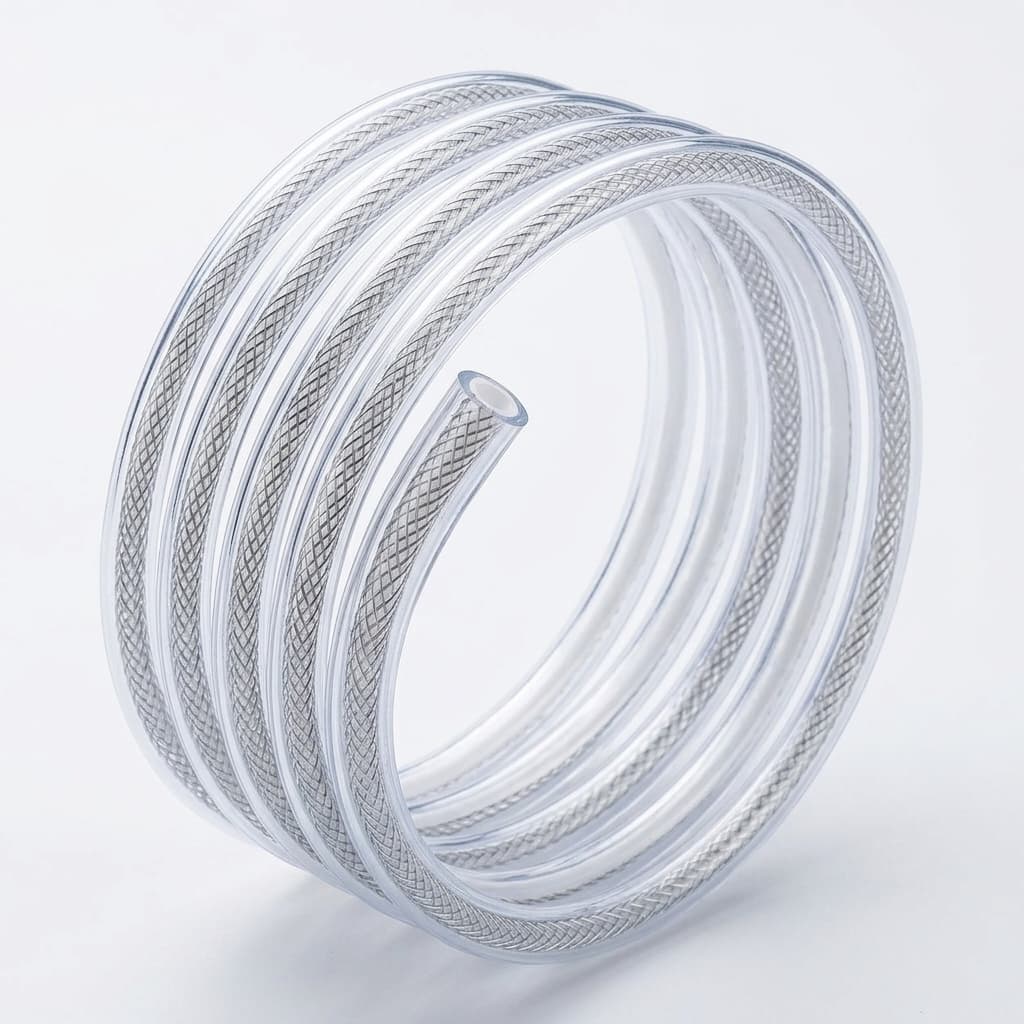
ECHA PFAS Restriction Update (May 2026): Impact on PTFE Catheter Liners and OEM Procurement
A deep dive into the ECHA RAC and SEAC 2026 milestones regarding the EU PFAS restriction, and how medical device OEMs must navigate supply chain risks, derogations, and alternative materials like UHMWPE.
The ECHA (European Chemicals Agency) public consultation on the SEAC draft opinion ended in May 2026, marking the beginning of the end for the "free use" era of medical-grade PTFE catheter liners. Medical device OEMs, procurement teams, and engineers must immediately initiate supply chain audits and begin validating alternative materials, as reliance on indefinite derogations carries severe compliance costs.
[!IMPORTANT] Executive Summary for Buyers & Specifiers The SEAC consultation closure (May 2026) following the RAC final opinion (March 2026) solidifies the path toward an EU-wide PFAS restriction. While time-limited derogations for medical devices are expected, the compliance, reporting, and justification burden will exponentially increase the cost of sourcing PTFE liners. Decision-Level Conclusion: Stop treating PTFE as a default for NPIs. Implement immediate cost and lead-time thresholds to trigger alternative material (e.g., UHMWPE) validations, as transient delivery catheters may only receive 5-year derogations compared to longer 12-year implant carve-outs.
What Changed in the Last 30 Days (2026 Update)
The regulatory landscape for Per- and Polyfluoroalkyl Substances (PFAS) has crossed critical milestones in the first half of 2026. After years of dossier preparation by five national authorities, the ECHA committees are finalizing their scientific and socio-economic evaluations.
Key Regulatory Milestones (2026-2029)
| Milestone Date | Governing Body | Action / Event | Impact on Medical OEMs |
|---|---|---|---|
| March 2, 2026 | ECHA RAC | Adopted final scientific opinion on the PFAS restriction proposal. | Confirmed the unacceptable risks of PFAS, setting the scientific baseline for strict restrictions. |
| May 25, 2026 | ECHA SEAC | Closed the 60-day public consultation on its draft socio-economic opinion. | Over 3,500 comments received; OEMs relying on PTFE must have submitted their use-case evidence for derogations. |
| Late 2026 (Est.) | ECHA SEAC | Expected adoption of the final SEAC opinion. | Final ECHA recommendations will be passed to the European Commission. |
| 2027 (Est.) | European Commission | Drafting and proposal of the REACH Annex XVII amendment. | Legislative text will clearly define the scope and duration of any medical device derogations. |
| 2028 - 2029 (Est.) | EU Parliament / Council | Entry into force following scrutiny and transition periods. | Immediate enforcement of reporting requirements and phase-out timelines for non-derogated uses. |
Derogation Boundaries: 5-Year vs 12-Year Exemptions
A critical misunderstanding among catheter OEMs is that all medical devices will receive universal, permanent exemptions. The proposed ECHA framework is built entirely on time-limited derogations following a standard 18-month transition period.
Derogation Applicability Matrix
| Device Classification | Derogation Period (Post 18-mo transition) | Expected Expiry | Material Strategy Implication |
|---|---|---|---|
| Implantable Devices (e.g., permanent stents, heart valves) | 12 Years | ~2041 | OEMs have a longer runway but must still submit exhaustive socioeconomic justifications. |
| Transient Delivery Systems (e.g., non-implantable EP/cardio catheter liners) | 5 Years | ~2034 | High Risk. If alternatives like UHMWPE or hydrophilic coatings are deemed feasible, ECHA will not extend this. Transition plans must start now. |
| Manufacturing Aids (e.g., FEP heat shrink) | 5 Years or less | ~2034 | Extrusion houses must find alternative reflow aids or switch to reusable molds/laser welding. |
Why It Matters: The Catheter Braiding Supply Chain
Polytetrafluoroethylene (PTFE) is the absolute workhorse for the inner lumen of cardiovascular, neurovascular, and electrophysiology (EP) braided catheters. Its uniquely low coefficient of friction allows guidewires, stents, and therapeutic devices to navigate tortuous anatomy without binding.
The impending REACH restriction forces an industry-wide reckoning. While life-saving medical devices will almost certainly secure derogations (exemptions), these will be time-limited and accompanied by massive regulatory overhead.
For buyers and specifiers, this means:
- Supplier Consolidation: Smaller PTFE extrusion houses may exit the EU market rather than bear the compliance reporting burden.
- Cost Surges: The administrative cost of proving "essential use" and managing derogation compliance will be passed down the supply chain.
- Redesign Mandates: Engineering teams can no longer default to PTFE for new product introductions (NPI) without extensive justification.
Alternatives and Constraints: PTFE vs. UHMWPE
The primary candidate for replacing PTFE in catheter liners is Ultra-High-Molecular-Weight Polyethylene (UHMWPE). However, UHMWPE is not a drop-in replacement. It introduces severe constraints during the thermal reflow and braiding processes.
Material Matrix: PTFE vs. UHMWPE Liners
| Property | PTFE (Current Standard) | UHMWPE (Primary Alternative) | Engineering Constraint |
|---|---|---|---|
| Coefficient of Friction | 0.05 - 0.10 (Excellent) | 0.10 - 0.20 (Good) | UHMWPE requires slightly more pushability force from the physician. |
| Reflow Temperature Limit | > 300°C (High) | ~ 130°C - 150°C (Low) | Critical: UHMWPE melts near the reflow temp of Pebax jackets, causing lumen collapse. |
| Etching Requirement | Required (Sodium-Ammonia) | Not strictly required, but corona/plasma treatment helps | Eliminating toxic chemical etching simplifies environmental compliance. |
| Biocompatibility | ISO 10993 Proven | ISO 10993 Proven | Both are highly biocompatible for blood contact. |
| Regulatory Risk (2026+) | High (Targeted by ECHA) | Low (Non-fluorinated) | UHMWPE provides long-term supply chain security. |
Who Should Act Now: Buyer Action Checklist
The window to audit your supply chain is closing. Waiting for the final EC regulation in 2027 will leave you scrambling alongside every other OEM.
Procurement Action Thresholds (When to trigger a redesign)
| Metric | Current State (2024-2025) | 2027+ Expected State | Action Trigger / Threshold |
|---|---|---|---|
| PTFE Liner Lead Time | 4 - 8 weeks | 12 - 20+ weeks (supplier consolidation) | > 12 weeks: Initiate dual-sourcing or alternative material validation. |
| Component Cost Premium | Baseline | +20% to +40% (compliance overhead) | > 15% increase: Run ROI analysis on UHMWPE conversion tooling costs. |
| Supplier Documentation | Standard CoC/CoA | REACH Annex XVII Justification Dossier | Refusal to provide PFAS tracing: Disqualify supplier for NPIs. |
For Procurement and Supply Chain Buyers
- Tier 1 Audit: Identify all extruded catheter liners and heat shrink tubing (FEP) that contain fluoropolymers.
- Supplier Readiness: Formally request statements from your extrusion and braiding partners regarding their PFAS derogation tracking and reliance.
- Cost Modeling: Factor in a 15-30% premium on PTFE components over the next 3 years due to compliance and reporting overhead.
For Engineering and R&D Teams
- Initiate Material Substitution Projects: Do not start new product designs with PTFE unless absolutely clinically necessary. Begin validating UHMWPE or high-density polyethylene (HDPE).
- Redesign Reflow Processes: If transitioning to UHMWPE, you must engineer new lamination techniques (e.g., lower-temperature jackets, laser reflow, or mechanical interlocking) to avoid melting the liner.
- Retest Bench Metrics: Re-validate the torque response, trackability, and kink resistance, as removing the etched PTFE bond will change the mechanical stackup of the shaft.
Risks and Evidence Gaps
It is crucial to define the boundaries of the current regulatory environment to avoid panic-driven engineering decisions:
- No Immediate Ban: PTFE is not banned tomorrow. The enforcement date is realistically 2028-2029, and medical implants/devices will receive derogations (likely 5 to 12 years).
- Evidence Gap - Device Categorization: The final boundary between what receives a 5-year versus a 12-year derogation is not yet codified in law. Currently, RAC and SEAC opinions suggest transient delivery systems face stricter timelines than permanent implants, but exact definitions are pending the final EC draft.
- Not a Drop-in Fix: Substituting PTFE with UHMWPE is a massive engineering undertaking. Attempting to run a UHMWPE liner through a standard high-temp Pebax reflow profile will result in total lumen collapse.
- Uncertain Geographic Scope: This restriction is specific to the EU (REACH). However, multi-national OEMs cannot afford to maintain separate SKU lines for EU and US/Asia markets, meaning the EU legislation acts as a de facto global standard.
Frequently Asked Questions (FAQ)
Will medical catheters be completely exempt from the PFAS ban?
No. While ECHA acknowledges the critical nature of medical devices, the proposed framework relies on derogations (temporary exemptions), not permanent carve-outs. OEMs will have to periodically prove that no feasible alternatives exist.
Can we just use FEP or PFA instead of PTFE?
No. FEP (Fluorinated Ethylene Propylene) and PFA (Perfluoroalkoxy Alkane) are also fluoropolymers and fall entirely under the universal PFAS restriction scope.
What is the biggest challenge when replacing PTFE with UHMWPE?
Thermal mismatch. PTFE can withstand temperatures over 300°C, allowing high-durometer Pebax or Nylon jackets to be melted over it during catheter lamination. UHMWPE melts at around 135°C, requiring completely overhauled, lower-temperature reflow processes.
Sources and Verifiable Evidence
The conclusions and timelines presented in this report are based on official documentation from the European Chemicals Agency and leading industry associations.
- European Chemicals Agency (ECHA): Registry of restriction intentions until outcome - Per- and polyfluoroalkyl substances (PFAS) (Status: SEAC consultation closed May 25, 2026).
- ECHA RAC Opinion: Committee for Risk Assessment (RAC) Final Opinion on PFAS (Adopted March 2026).
- MedTech Europe: Sectoral positions and evidence submitted during the SEAC consultation regarding the essential use of fluoropolymers in cardiovascular and neurovascular devices.
- European Commission REACH Framework: Detailed documentation on the standard 18-month transition periods and subsequent 5-year or 12-year derogation structures. https://environment.ec.europa.eu/topics/chemicals/reach-regulation_en
Author

Categories
More Posts
Catheter Marker Band Assembly: Swaging vs. Bonding for Radiopacity
A practical engineering guide to integrating radiopaque marker bands into reinforced catheter shafts. We compare swaging and thermal bonding techniques, dimensional tolerances, and inspection criteria.
Braided vs. Coil Reinforced Catheters: Choosing the Right Shaft Architecture
A deep dive into when to specify a braided catheter shaft versus a coil reinforced catheter for neurovascular, cardiovascular, and structural heart applications. Includes material data and PPI calculations.
FDA Early Alert: Abiomed/Oscor Large-Bore Sheath Leakage and Hub Bonding Risks
The June 2026 FDA Early Alert regarding Abiomed and Oscor 14Fr/23Fr introducer sheaths reveals critical hub bonding and splittable score line vulnerabilities in large-bore catheter manufacturing.